Jeremy McGrath's Offroad
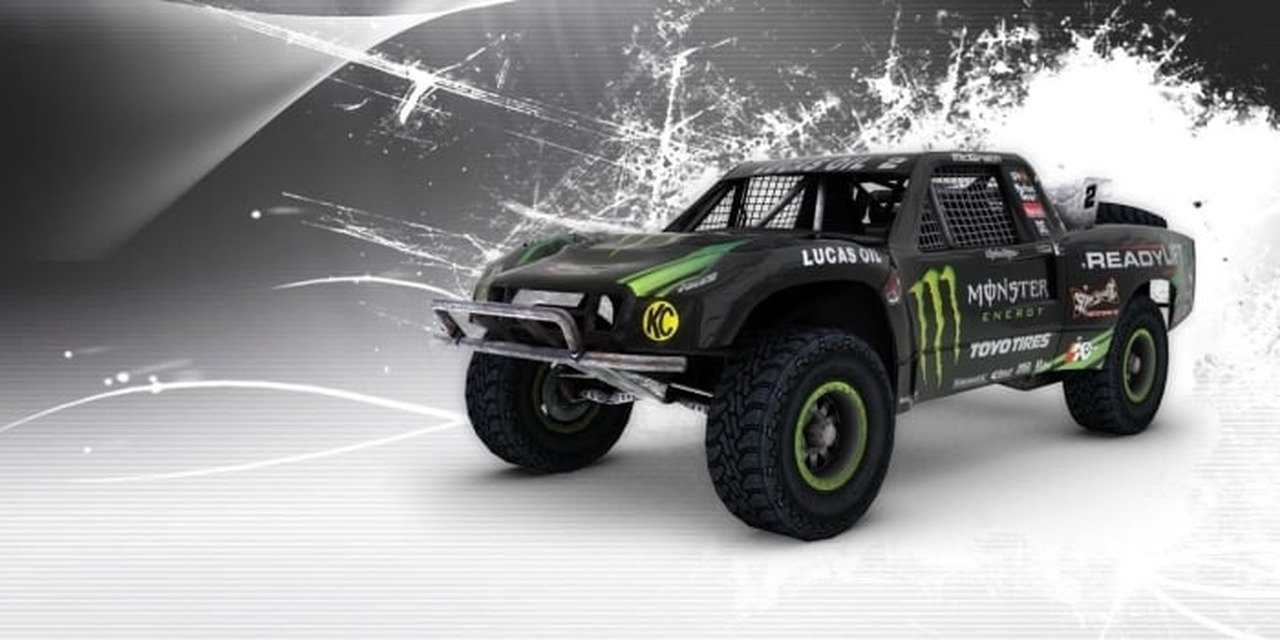
Jeremy McGrath's Offroad: Cross-Platform Console Racing Engine
Engineering a high-performance 1080p 60fps racing simulation, custom memory allocators, and deterministic UDP multiplayer across Xbox 360, PlayStation 3, and mobile.
Executive Summary
Jeremy McGrath's Offroad delivered competitive offroad truck and buggy racing featuring dynamic terrain deformation, multi-vehicle physics simulation, and real-time multiplayer across Xbox 360, PlayStation 3, and iOS. Drawing on custom C++ engine infrastructure, fixed-block memory allocators, and custom UDP packet streaming, the title achieved solid 60 FPS console certification and rapid publisher signoff.
Consistent 60 frames per second on Xbox 360 and PlayStation 3 hardware with 8 vehicles on track.
Pre-allocated ring buffers and frame arenas eliminated runtime garbage collection and OS paging hitches.
Passed Xbox Technical Certification Requirements (TCR) and PlayStation Technical Requirements (TRC) on first submission.
Client-side prediction, entity interpolation, and compact delta compression keeping network bandwidth under 18 KB/s.
Technical Constraints and Certification Demands
Developing a cross-platform arcade racing simulator across drastically different hardware architectures (Xbox 360 three-core Xenon CPU vs. PS3 Cell Broadband Engine with SPUs) created rigorous performance and platform hurdles.
Heterogeneous Console Hardware
Xbox 360 offered 512 MB unified memory with 3 symmetrical CPU cores, while PlayStation 3 split memory into 256 MB XDR RAM and 256 MB GDDR3 VRAM, requiring asymmetric job dispatching across Cell SPUs.
Strict 60 FPS Frame Budget
Dynamic suspension raycasting, terrain deformation, wheel slip calculations, and vehicle collision meshes had to execute within a tight 16.6 ms frame budget without dropping frames.
Rigorous First-Party Certification
Passing Sony TRC and Microsoft TCR guidelines required careful handling of signed-out controllers, network drops, disc read interruptions, and memory limits.
Architectural Solutions and Custom Systems
We designed custom subsystems decoupled from platform APIs, ensuring the core physics, network serialization, and memory management stayed clean and portable across all targets.
Dual-Tier Memory Management
Eliminated heap fragmentation by allocating dedicated memory pools during level initialization. Frame-temporary physics arrays used scratchpad stack allocators reset at V-Blank.
- Fixed-size memory arenas for vehicle state buffers
- Zero dynamic heap allocations during gameplay
- Custom alignas(16) SIMD-friendly vector operations
Deterministic Physics and Dynamic Terrain
Offroad terrain mesh deformation updated heightfields in real time as tires carved ruts into dirt tracks, feeding directly into multi-point suspension springs.
- 4-point raycast wheel suspension with anti-roll simulation
- Real-time vertex heightfield deformation with LOD falloff
- Dynamic tire slip curves calculated per surface friction type
UDP Client-Side Prediction and Delta Netcode
Built low-latency packet streaming over UDP, sending timestamped user steering/throttle inputs with client-side dead reckoning and snapshot smoothing.
- Quantized position and orientation delta updates
- Hermite spline interpolation across packet arrivals
- Graceful handling of synthetic packet loss up to 10%
Cross-Platform Engine Architecture and Pipeline
Core simulation architecture separating deterministic physics and UDP netcode from platform-specific graphics backends.
Architectural Principles Demonstrated
- Memory Budgets Are Absolute: Designing for the most constrained platform early (PS3 256MB split architecture) meant the Xbox 360 and mobile ports ran with ample headroom.
- Decouple Physics from Rendering: Running the physics solver on a fixed 60Hz tick independent of variable render times preserved simulation stability across all hardware.
- Sanitize Wire Protocols: Quantizing orientations to 16-bit integers and transmitting delta coordinates dropped multiplayer packet sizes by 65%, keeping gameplay fluid on consumer DSL.
Platforms
Technologies
Tags